
From its earliest days, video gaming has been defined by conflict. The very first competitive titles placed players in direct opposition, encouraging combat as the primary form of interaction. Most of this violence has traditionally been aimed at characters — soldiers, monsters, aliens, and villains. Yet alongside that familiar path runs a quieter, equally fascinating tradition: the destruction of the world itself.
This alternative lineage focuses not on defeating enemies, but on tearing down the environments that surround them — collapsing buildings, shattering infrastructure, and reshaping landscapes into rubble. It is a history built on concrete, steel, and spectacle.
Building Busters
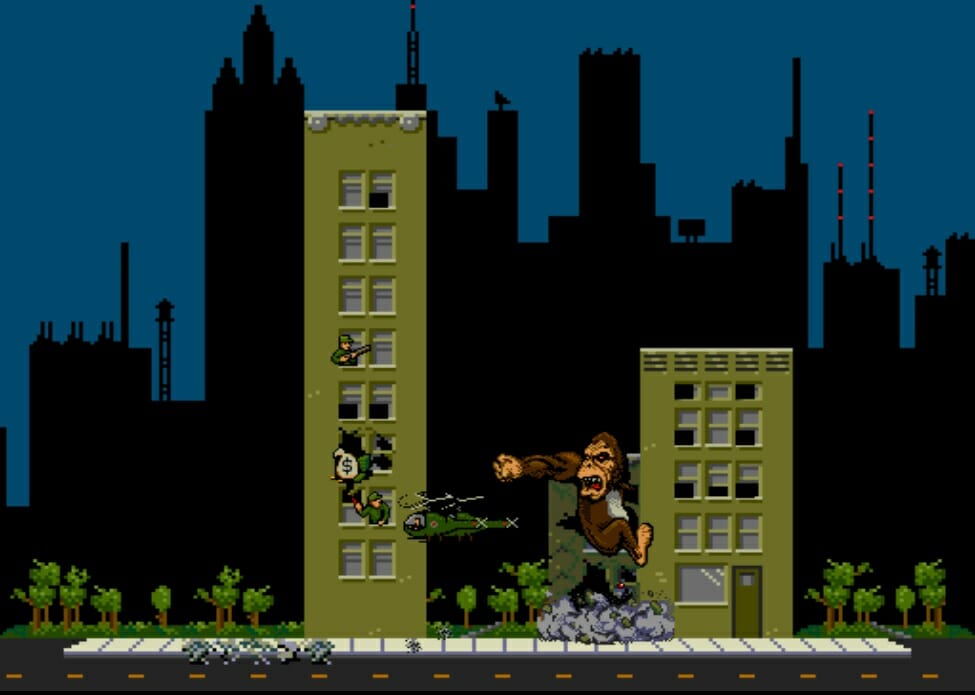
One of the earliest and most memorable examples of environmental destruction came from Midway’s arcade classic Rampage. Drawing inspiration from monster films such as King Kong and Godzilla, the game placed players in control of towering creatures tasked with flattening entire city blocks. Skyscrapers crumbled, helicopters were swatted from the sky, and destruction itself became the central objective rather than a side effect.
Later, Rare pushed this concept further with Blast Corps on the Nintendo 64. At first glance, it looked like a chaotic demolition simulator — but beneath the surface it was a clever puzzle game. Players were required to select the right combination of vehicles and mechanized suits to dismantle buildings and clear a safe path for a runaway nuclear missile carrier. Bulldozers skidded through walls, motorbikes launched rockets, and robotic suits somersaulted through structures, creating a playful but methodical approach to destruction.
Modern indie titles such as Brigador would later revisit this style of mechanical wreckage, blending precision and spectacle into urban demolition once again.
An Explosive Evolution
The introduction of destructible environments into first-person shooters marked a turning point. Red Faction made environmental destruction part of its identity by introducing technology that allowed players to blast holes through walls, collapse structures, and even carve new tunnels through terrain. These mechanics were more than just impressive visuals — they became tools that allowed players to alter their surroundings and create entirely new tactical possibilities.
Set on a terraformed Mars, the game’s themes of rebellion and resistance were reflected in its destruction mechanics. Breaking down walls and infrastructure became symbolic acts of defiance rather than just mechanical features.
This philosophy reached new heights with Red Faction: Guerrilla, which placed players in a fully open world where entire buildings could be systematically dismantled. Armed with tools ranging from sledgehammers to advanced disintegration rifles, players tore apart oppressive installations piece by piece, turning demolition into both gameplay and narrative expression.
Although the studio behind the series later faced financial troubles, its influence on game design would echo throughout the industry.
A Growing Appetite For Ruin
Avalanche Studios embraced large-scale destruction with its Just Cause series, which expanded the concept into vast open-world playgrounds. Here, environmental demolition became louder, larger, and more theatrical. Players took on the role of a revolutionary figure toppling dictatorships by dismantling military compounds, radar towers, and industrial facilities across sprawling maps. Vehicles, explosives, and physics-based chaos combined to make destruction feel both strategic and spectacular.
At the same time, environmental damage became more subtle and widespread across action games. Bullets chipped away at cover, explosions reshaped terrain, and destructible objects became standard design elements rather than special features.
Among multiplayer shooters, the Battlefield series became particularly known for its large-scale environmental destruction. Battlefield: Bad Company 2 stood out for allowing nearly every structure to be damaged or completely destroyed, permanently altering maps and creating dynamic tactical shifts during matches. Buildings collapsed, cover vanished, and entire strategies had to adapt in real time.
Later installments refined these ideas, and modern entries continue to revisit the franchise’s roots by promising more reactive, evolving battlefields.
The Lasting Impact
Environmental destruction has evolved from a novelty into a defining design philosophy. What once served as spectacle now shapes pacing, strategy, and immersion. It gives players the power not only to defeat opponents, but to permanently alter the worlds they inhabit.
By allowing environments to crumble, shift, and disappear, games create experiences that feel dynamic, unpredictable, and deeply physical. The destruction of virtual worlds has become more than just visual flair — it is now one of the most powerful tools developers use to make digital spaces feel alive.