
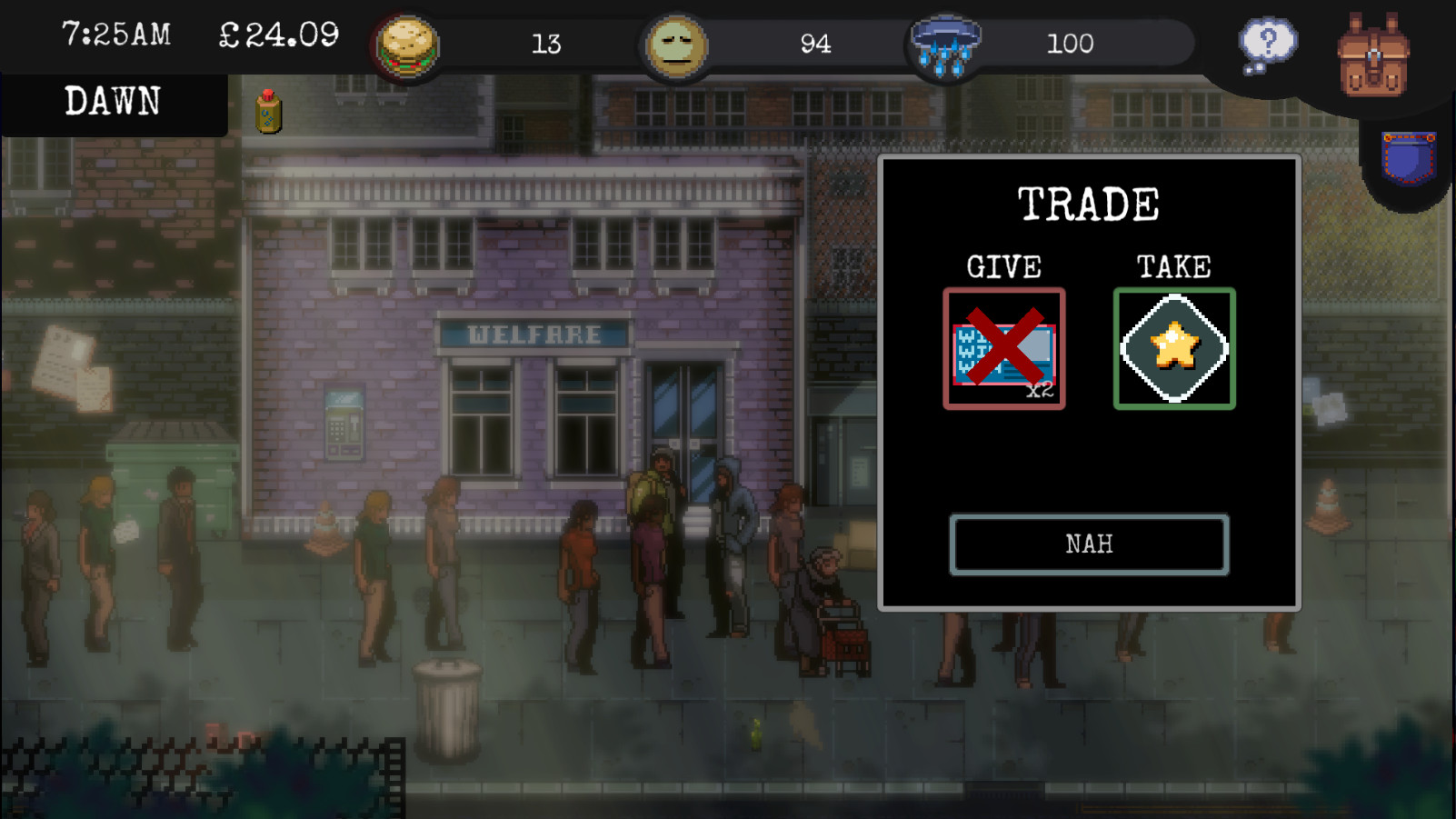
Homelessness continues to rise across the United Kingdom, becoming one of the most urgent social challenges of modern urban life. With increasing numbers of people forced to live without stable housing, awareness campaigns and charitable initiatives have become more important than ever. Change: A Homeless Survival Experience, developed by indie studio Delve Interactive, approaches this crisis from an unusual perspective — through interactive storytelling and survival gameplay.
Rather than presenting homelessness as a background theme, Change places players directly into the role of someone who has lost their home. The goal is not simply to survive — it is to understand the daily struggles, difficult decisions, and emotional pressure faced by people living on the streets.
Survival Through Scarcity
At its core, Change functions as a survival simulator. Players must manage essential needs such as hunger, health, and hygiene while navigating a city that is often indifferent or hostile to their presence. Food, shelter, and small amounts of money become precious resources, forcing players to think carefully about every decision they make.
Money is difficult to obtain and often relies on begging for spare change from passersby. Many people ignore the player entirely, while others offer only modest amounts. This slow, uncertain income stream mirrors the instability of real-life homelessness, creating a constant sense of vulnerability.
Once players gather enough money, they can purchase food or hygiene products to maintain their health. Alternatively, they may search through discarded waste for free food, which offers less nourishment and carries greater risk. Every choice becomes a trade-off between short-term survival and long-term stability.
Hygiene, Dignity, And Social Barriers
One of the most impactful systems in Change is its hygiene mechanic. Poor hygiene directly affects how non-playable characters respond to the player. As cleanliness declines, more people ignore requests for help, and access to shelters and safe public spaces becomes restricted.
Simple items such as deodorant and basic hygiene products become essential tools for maintaining social access. Without them, players may find themselves denied entry into buildings, public transport, or shelter services — reinforcing how dignity and appearance can influence survival opportunities.
Employment opportunities exist within the game, but securing them requires maintaining acceptable hygiene levels. This creates a cycle of difficult decisions: spending money on food may keep you alive today, but neglecting hygiene can prevent you from improving your situation tomorrow.
Finding Shelter And Safety
While the long-term objective of the game is to save enough money to rent an apartment and escape homelessness, the journey toward that goal is long and unforgiving. Until stability is achieved, players must rely on temporary shelters, public spaces, and makeshift sleeping arrangements.
Sleeping outdoors harms health and increases the risk of failure, while homeless shelters offer safer alternatives but with limited access. Libraries, underground stations, and other public buildings can provide warmth and temporary safety — but improper behavior or declining hygiene can lead to being removed.
These systems create a persistent feeling of uncertainty. Safety is never permanent, and stability always feels just out of reach.
Depth Beyond Survival
As players progress, they can learn new skills such as busking, which improves income potential. Animal companions can also be befriended, offering small advantages in attracting donations. These mechanics add depth and personalization, making each playthrough feel unique.
Randomized events, changing weather, and evolving city conditions ensure that no two runs are the same. This unpredictability reflects the fragile nature of life on the streets and keeps the survival experience engaging and emotionally grounded.
A Game With Purpose
Beyond its gameplay, Change stands out for its social mission. A portion of its proceeds are directed toward homeless charities, ensuring that the game contributes to real-world support efforts. It offers players both an engaging survival challenge and an opportunity to participate in meaningful awareness.
At an accessible price point and with thoughtfully designed systems, Change: A Homeless Survival Experience provides more than entertainment. It invites players to reflect on homelessness not as a distant issue, but as a lived experience shaped by constant uncertainty, difficult choices, and the fragile pursuit of stability.