
Mountains have always carried a quiet magnetism. Their towering silhouettes promise mystery, challenge, and triumph, drawing people toward their peaks with a kind of primal pull. Video games have long mirrored this fascination, transforming mountains into symbols of progression, danger, and discovery — places where stories reach their most dramatic moments and journeys are truly tested.
From gaming’s earliest days, climbing has represented growth and victory. Mario’s ascent in Donkey Kong turned vertical movement into a metaphor for overcoming adversity. Meanwhile, The Legend of Zelda introduced Death Mountain, a looming volcanic region positioned at the edge of Hyrule — a place that felt both forbidden and essential, daring players to venture upward into uncertainty.
Vertical Worlds And Expanding Horizons
As games transitioned into three-dimensional spaces, mountains took on greater significance. Titles like Super Mario 64 and Ocarina of Time expanded what climbing meant, allowing players to scale slopes, traverse ridges, and experience a new sense of height and depth. Verticality became an integral part of exploration rather than a background detail.
Early 3D worlds often used mountains as distant backdrops — painted silhouettes that framed the horizon but remained unreachable. It wasn’t until open-world design matured that mountains began to take on realistic, explorable forms that mirrored their real-world counterparts.
Open Worlds Embrace Natural Landscapes
Rockstar Games was among the first major studios to seriously experiment with natural terrain. Grand Theft Auto: San Andreas introduced vast rural regions where a single mountain rose sharply from an otherwise flat landscape, hinting at a future where natural spaces could rival cityscapes in importance.
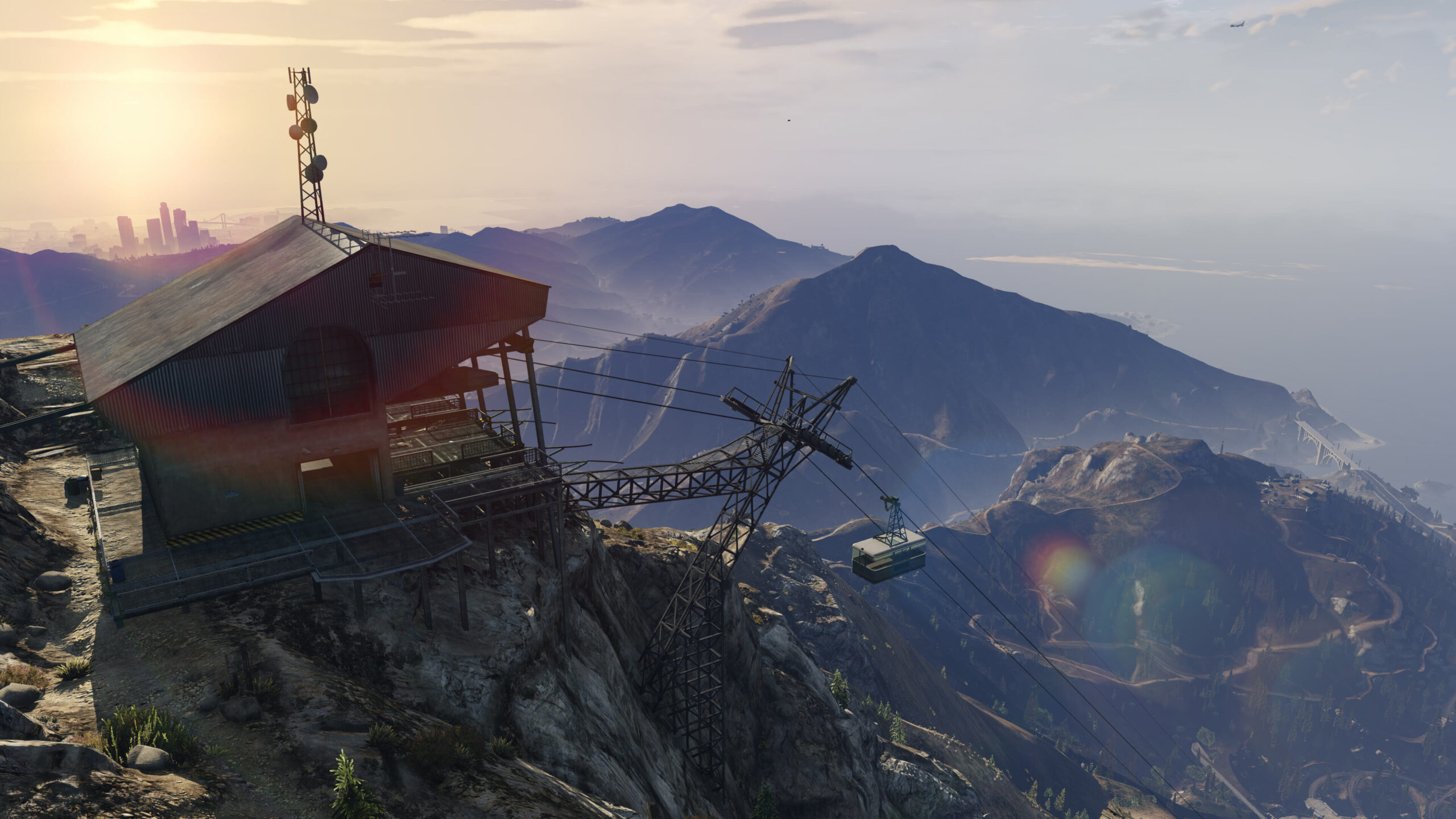
That promise was fully realized in Grand Theft Auto V with Mount Chiliad — a living landmark complete with hiking trails, cable cars, and panoramic viewpoints. Surrounded by hills and valleys, Chiliad felt less like a boundary and more like a destination, inviting players to explore its slopes and secrets.
Rockstar carried this philosophy into Red Dead Redemption, where rugged mountain ranges defined the northern frontier. Though some peaks marked the edges of playable space, their presence reshaped how players perceived scale, distance, and isolation.
From Backdrops To Centerpieces
Ubisoft further advanced mountainous gameplay in titles such as Far Cry 5 and Ghost Recon: Wildlands. In these worlds, mountains are no longer just environmental decoration — they are core gameplay spaces. Reaching high ground becomes a test of endurance, strategy, and navigation, rewarding players with breathtaking views and a sense of earned accomplishment.
Fantasy worlds have embraced this design as well. The Witcher 3 features vast highlands and windswept cliffs that hide secrets, vantage points, and unique traversal opportunities. Regions like Skellige offer towering slopes that challenge players physically while immersing them in somber, atmospheric beauty. Even unreachable peaks looming in the distance contribute to a sense of scale and grandeur.
The Mastery Of Breath Of The Wild
Few modern games showcase mountains as effectively as The Legend of Zelda: Breath of the Wild. Death Mountain returns as a roaring volcanic giant, but it is joined by massive ranges such as the Hebra Mountains and Mount Lanayru — icy, remote summits that demand careful planning and preparation.
These mountains serve not just as destinations, but as navigational anchors. Their peaks guide exploration, reveal hidden terrain, and encourage players to chart their own paths through the wilderness. Standing atop a summit offers clarity — a chance to see the world below and decide where the next journey will lead.
Why Mountains Endure In Game Design
Mountains are more than dramatic scenery. They shape how players move through worlds, how they perceive distance, and how tension and reward are balanced. They challenge both skill and patience, offering moments of calm reflection alongside the thrill of achievement.
From symbolic climbs to fully realized open-world landmarks, mountains have evolved alongside gaming itself. They remain enduring pillars of game design — inviting players upward, outward, and deeper into worlds built on wonder, danger, and discovery.